School of Physics, Sun Yat-sen University
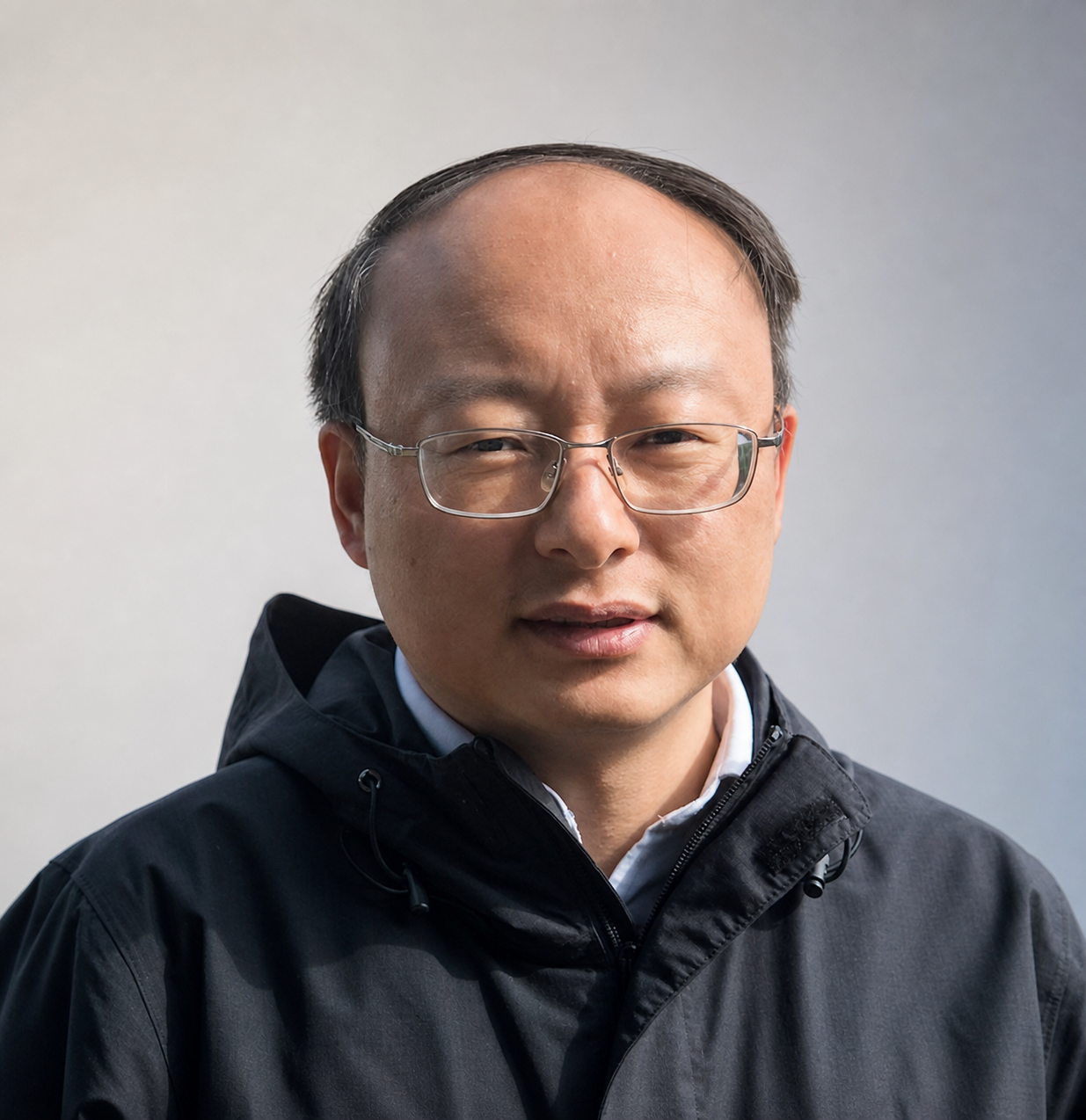
Peng Ye (Family/Last name: Ye/叶/葉; Given/First name: Peng/鹏/鵬) is Professor of Physics (2018-present) at Sun Yat-sen University, Guangzhou, China. He works on fundamental problems in quantum many-body systems from the interdisciplinary perspectives including quantum field theory, quantum information, condensed matter theory, mathematical physics, and related areas.
Peng Ye received his B.S. degree in Physics from the Department of Physics, Sun Yat-sen University in June 2007. He obtained his Ph.D. in Physics from the Institute for Advanced Study, Tsinghua University in June 2012 (advisor: Prof. Zheng-Yu Weng). From September 2012 to August 2015, he carried out postdoctoral research at the Perimeter Institute for Theoretical Physics, Canada (collaborating mentor: Prof. Xiao-Gang Wen). From August 2015 to August 2018, he conducted postdoctoral research in the Department of Physics and the Anthony J. Leggett Institute for Condensed Matter Theory at the University of Illinois at Urbana–Champaign (collaborating mentor: Prof. Eduardo Fradkin), serving as a Gordon & Betty Moore Fellow. In November 2015, he visited the Center of Mathematical Sciences and Applications at Harvard University as an Associate. In August 2018, he joined the School of Physics, Sun Yat-sen University as Professor of Physics. He currently serves as an Editorial Board Member of Physical Review Research of the American Physical Society (APS), and is an affiliated faculty member of the State Key Laboratory of Optoelectronic Materials and Technologies and the Guangdong Provincial Key Laboratory of Magnetoelectric Physics & Devices.
Peng Ye has received research support from national oversea (2018), provincial (2019), and university (2018, 2023) talent-recruitment programs, as well as from provincial funding agencies and the NSFC. He welcomes applications from motivated prospective students and postdoctoral researchers interested in quantum many-body theory, topological phases of matter, quantum field theory, and quantum information.
My research lies in quantum many-body theory, especially at the interface of quantum field theory and quantum information. I am broadly interested in the universal structure of strongly correlated quantum matter, with particular focus on higher-dimensional topological phases of matter, fractonic superfluidity, fracton-related lattice models, subsystem symmetries, and entanglement in fermionic systems. Across these topics, a central theme of my work is to connect continuum field-theoretic descriptions with microscopic lattice constructions, and to use this connection to understand new phases of matter, their excitations, and their entanglement structures.
One major direction of my current research concerns the field-theoretic structure of topological order in three and higher spatial dimensions. In these systems, the relevant excitations are not limited to point-like quasiparticles, but can also include extended objects such as loops and membranes. Their fusion, shrinking, and braiding processes are correspondingly richer than in two-dimensional topological order, and require theoretical frameworks beyond the standard Chern–Simons paradigm. My work in this area develops topological field-theory (TQFT) descriptions of such phases and studies universal structures including non-Abelian fusion rules, shrinking rules, and associated pentagon and hexagon consistency equations in terms of diagrammatic representations. An important aspect of this program is to clarify how these continuum descriptions encode universal infrared physics and how they connect to explicit microscopic realizations in lattice models.
A second main direction of my research is fractonic superfluidity and, more broadly, quantum many-body systems with higher-moment conservation laws. These generalized conservation laws can substantially modify familiar notions in many-body physics, including spontaneous symmetry breaking, off-diagonal long-range order, Goldstone modes, and finite-temperature phase transitions. My work develops continuum and perturbative field-theoretic approaches to these systems and explores how mobility constraints and higher-moment symmetries give rise to unconventional collective behavior, including generalized Hohenberg-Mermin-Wagner theorems, hierarchical Kosterlitz–Thouless-type transitions. This direction is motivated both by fracton physics, conceptual questions in field theory and by connections to cold-atom and related many-body settings.
I also work on correlated topological phases from a quantum-information perspective, especially fracton topological order and subsystem-symmetry-protected phases. This includes the construction of exactly solvable models in arbitrary dimensions, the development of quantum-circuit frameworks, and the use of higher-order cellular automata as a systematic tool for generating nontrivial subsystem symmetry structures. Related to this, I am interested in diagnostic tools for many-body order, including multi-point strange correlators, which can be used to probe classes of topological and subsystem-structured states that are difficult to characterize by more conventional means. These problems sit naturally at the intersection of condensed matter theory, quantum information, and computational structures in many-body systems.
Another continuing line of research concerns entanglement in fermion systems. Here I study universal aspects of entanglement entropy and entanglement spectra, especially in settings with nontrivial geometry (e.g., fractal lattice and hyperbolic lattice) and in non-Hermitian systems. A recurring goal is to understand how geometry, fermionic statistics, and spectral structure are reflected in entanglement observables, and how these observables can reveal robust many-body features beyond standard band-theoretic descriptions. This work connects quantum information ideas with analytical tools in many-body theory and mathematical physics.
Across these directions, I am interested in problems where field theory, lattice models, topology, symmetry, and entanglement meet. My research combines continuum field-theoretical methods, exactly solvable constructions, and quantum-information-inspired diagnostics to study the structure of quantum phases and phase transitions in quantum many-body systems.
Search labels (Ctrl+F) to find related papers.
The bracketed identifiers preceding each publication indicate the arXiv posting order, where [25a] refers to the first paper posted on arXiv in 2025, followed by [25b], [25c], etc.